When disaster strikes, whether you live or die depends on how you react to the crisis…
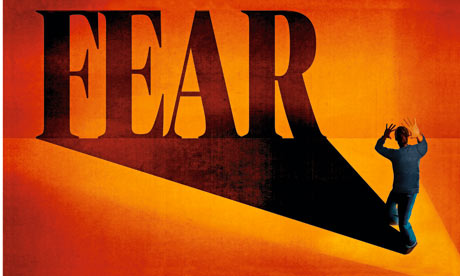
Illustration: Matt Murphy
If you suddenly found yourself in a life-or-death crisis and had to make a decision that would either save your life or end it, are you confident you'd make the right one? People in the state of Victoria, Australia, faced just such a decision in February and March this year. For five weeks, catastrophic
brush fires swept across the state. Government policy held that when fire threatened a neighbourhood, homeowners were to make a choice: stay and fight to save their houses, or evacuate early. They were explicitly instructed not to wait until the flames were close. Trying to run from an advancing wildfire is the surest way to die in it.
The choice made sense in strictly rational terms. But in the wake of the devastation, a vociferous debate arose over the wisdom of the policy: can people be expected to make rational decisions, critics asked, when they're surrounded by 1,200C flames raging four storeys high?
Most people have never faced imminent, lethal danger, and so couldn't possibly know how they would react to the experience of extreme fear. But, as thousands of Australians found out, danger can overtake us with surprising speed.
Everyone in Melbourne knew that Saturday 7 February 2009 was going to be brutal. The southern summer had been a scorcher, with temperatures the previous week climbing above 43C (110F) three days in a row. That day the mercury was forecast to climb even higher. Winds were strong and a long drought had left the vegetation brittle and dry.
In
Glenburn, a farming community outside the city,
Victoria University professor Ian Thomas spent the day listening for weather updates on the radio. An engineer, Thomas specialised in calculating the risk of fire in buildings. His house and lawn were surrounded by trees on all sides and abutted the eucalyptus forest of
Kinglake national park: "We didn't need the forecast to tell us that it was dangerous," he says.
At about 11am, high winds knocked down a power line that ran through pasture 25 miles to the north-west. Within hours, a roaring wall of flames was burning eastward. Then, at about 4pm, the temperature suddenly dropped. "We started to relax," Thomas says. "Nothing big had happened." Soon after, the power went out. Fifteen minutes later it came back on, then died again.
What the radio broadcasts had failed to report was that the wildfire had spread all the way to the town of
Kinglake, less than 10 miles from Thomas's home. The cooler breeze had fanned the flames to new intensity, and was driving them towards Glenburn at freight-train speeds. The first inkling of trouble came when a couple who lived nearby, Lou and Cheryl Newstead, pulled into the Thomases' driveway. They brought news that their son had just called to tell them the fire was heading their way. As they talked, the wind that was blowing in from the south darkened with smoke. Ash and glowing embers started dropping out of the air.
"We went from not having any particular worries to having fire in our immediate vicinity very quickly," Thomas says. The decision point – stay or go – had arrived faster than anyone had anticipated. The neighbours decided to evacuate; the Thomases, to stay and defend. "My thinking was that they were foolish in driving off in that situation," Thomas says. "They didn't know what they were driving into." But his own situation was scarcely better. With the power out and the fire on their doorstep, the Thomases were entirely on their own. What they would not find out until much later was that the fire that was racing towards them had already become the deadliest single blaze in Australian history.
The fire exploded up the ridge at 80mph. Hardest hit was a tidy neighbourhood of homes along Pine Ridge Road, Kinglake, where a triangle of land was flanked on two sides by steep hillside. Topography that once provided fine views over the southern plain now exposed them to fire from two directions at once. The entire community was caught unawares. There was no time to contemplate the options.
Rob Richings, a service technician, decided to make a run for it once the windows of his house started to explode from the heat. "It's against the rules, but this wasn't a normal bush fire," he later said. As it was, he managed to drive through the flames and reach safety. Many others did not. Disoriented in the smoke, cars crashed into each other on the jammed road. Flames melted tyres and exploded fuel tanks. In one car, six people died together when their vehicle was consumed by fire.
Staying put was just as much of a gamble. Another neighbour, Tina Wilson, planned to take her three children to the nearby home of Paul and Karen Roland, who were holed up with their two daughters. "The house has got sprinklers on the roof and we'll be fine," Wilson told her partner over the telephone. "I'll call you soon." Soon after, Karen Roland phoned her sister. "It's too late!" she yelled over the roar of the fire. "We're trapped!" They all perished.
By the time the fire was burning its way through to the Thomases' tree line, 70 people were dead. Thomas had counted on his sprinkler system to protect his house and garden from the fire, but the pump was electric and the power lines were down. If he and his wife were going to fight the fire, they'd have to do it by hand, with buckets. The smoke grew so thick that it was impossible to see more than a few feet. "It was like a steam train coming at you," he says.
Soon the fire had surrounded the house. Thomas and his wife had committed themselves to their decision. Whether or not it was the right one, they had no way of knowing. All they could do was handle themselves as best they could.
The first step to dealing with a crisis is acceptance. Studies of disasters have found that many people remain in denial in the face of evident danger. Nightclub patrons continue to dance and order drinks as smoke fills a burning hall; passengers on a sinking ferry sit and smoke cigarettes as it lists ever more ominously to one side. This denial is driven by a mental phenomenon called "
normalcy bias". Psychologists say that people who have never experienced a fatal catastrophe have difficulty recognising that one could be unfolding.
For those who do accept what's happening, the most terrifying part of a crisis is likely to occur at the very beginning, while the full scope of the danger remains unclear. Anticipatory fear is often worse than the experience itself. Performers who throw up before every performance never throw up on the stage itself. The scariest part of jumping out of a plane is the instant before you leave the door. Psychologist
Seymour Epstein conducted a
study in which novice jumpers were fitted with heart-rate monitors that measured their pulse as their plane climbed upward toward its release point. He found that their heart rates got faster and faster until just before they jumped, declining precipitously once they were actually out of the plane. The most stressful part of the experience was the anticipation.
Uncertainty in the face of danger magnifies stress by forcing a person to think about a wide range of possible outcomes and weigh the strategies for dealing with those outcomes. It also allows worst-case scenario thinking. A key early step to combating fear is to find out as much information as possible about the threat at hand.
When we're facing a life-threatening situation for the first time, one of the biggest uncertainties we face is what will happen inside our own minds. Having been in danger before can help. When
Dave Boon's car was struck by an avalanche on a road near Denver, US, he benefited from having been in another, very different, life-threatening situation two years earlier. He'd been white-water rafting when his boat was swept by the force of a rapid below an overhanging rock. Boon didn't panic, and the force of the water eventually pulled him free. Two years later, as he found himself tumbling end-over-end inside the avalanche, he knew he wouldn't panic then, either. And that was a powerful piece of information.
The more control a person has over a threatening situation, the less anxiety it provokes. Numerous experiments have shown that being out of control of a negative situation leads to the release of the stress hormone
cortisol. Engaged in useful activity, it's easier to stop thinking about your internal experience of fear and instead focus usefully on external things, such as improving your situation.
Some people, such as optimists and extroverts, are generally more prone to take an active approach in a crisis. So are people who see themselves as capable of shaping the outcome of whatever situation they find themselves in. A related concept is self-efficacy, a person's belief that he or she is capable of accomplishing a given task. People with these character traits tend to perceive and take advantage of opportunities to change the situations they find themselves in.
These are the sorts of people you want with you when the going gets hairy. In 1967, a raging winter storm trapped mountain climber
Art Davidson and two friends in an ice cave near the summit of
Denali, Alaska. Days went by as they slowly succumbed to hypothermia and starvation, nearly immobile in their tiny hole. They kept themselves going by making careful plans about the only thing over which they had any control, their meagre rations. When the food ran out, they managed to find another problem to grapple with: how to locate a cache of fuel that one of them remembered was hidden nearby. By stringing together a series of meagre hopes, they managed to survive six days, at which point the weather broke and they escaped down the mountain.
Reframe
An alligator can't make you scared. A skidding car can't make you scared. The only thing that can make you scared is your mind's interpretation of those things. Fear is a phenomenon that resides entirely within your brain. That's why the most powerful method of all for controlling fear is reappraisal. But some people are better at reappraisal than others. Studies have found that people who are able to think of events as challenging rather than threatening are able to cope better with their emotions, have more positive feelings, and are more confident.
Marc Taylor, in a study of military personnel undergoing hyper-realistic combat training, found that subjects who relied on positive reappraisal to cope with their situation had lower levels of stress hormone in their bloodstream. Contrast that useful kind of positive thinking with the negative appraisal that's common to people in the throes of social anxiety.
Sir
Laurence Olivier was among the most gifted actors of the 20th century. But in 1964, when Olivier was 57 and had been performing for more than four decades, he was gripped by stage fright. On the opening night of
Ibsen's The Master Builder, in which he had a starring role, he froze. It was the moment that actors dread.
For those of us who have not experienced stage fright, it's difficult to grasp the impact of such a moment. But the terror is equivalent to that aroused by actual, mortal danger. The sympathetic nervous system launches into full overdrive, generating a physiological response appropriate to a life-or-death crisis. Actors say the sensation is a good deal like plummeting from a great height.
Like a panic attack, stage fright often occurs in the wake of other stress in a person's life. And as with most forms of anxiety, once unleashed, it's a demon that continues to lurk in the margins of awareness, always threatening to reappear.
Cognitive behavioural therapy is a powerful tool in overcoming anxiety disorders. Patients are taught to recognise when they're thinking unrealistically negative thoughts, and then deliberately to reassess the situation in a more positive light. But one doesn't need to go to a professional therapist. Anyone who's trying to get a grip on their emotions in the heat of a crisis can simply find someone to share their feelings with – or even say them aloud to themselves – in order to regain some control over their mental systems.
As the fire raced toward the Thomases' home, they had no time to express their fear. They were too busy taking action. The fire swept through the trees surrounding their house until it was blazing around them in all four directions. With a crack, a huge gum tree shuddered and crashed on to their driveway, blocking them in. The fire kept creeping forward and the Thomases kept patrolling, checking their most vulnerable points, hurriedly lugging buckets of water to counter each new thrust. Keeping continuously active helped to keep fear at bay.
As time went on, their growing store of information about the fire also reduced the stressfulness of the crisis. "The longer it went on, in a sense the more comfortable we got with it," Ian Thomas says, "because we started to feel that we'd already been to some degree successful, and we stood a chance of continuing to be successful."
Finally, at around 2.30am, the situation appeared to stabilise. The fire had crept to within 15ft of the house, but the flames in the immediate vicinity were now out and the carpet of burned-out grass formed a protective barrier. Together, the weary couple collapsed and slept fitfully for three hours, keeping the blinds open so they could check for flare-ups.
But the fight was not over. With the coming of the dawn, the wind began to build, whipping smouldering embers back into flame. Pockets of unburned vegetation erupted like roman candles. Thomas staggered outside to douse the most threatening flare-ups, but he was weak from the night's fight and suffering from
heat stroke. He could not take even a sip of water without throwing up. Gradually, the flare-ups became less menacing and the Thomases began to relax. Except for their house, their property had been incinerated. But they were alive.
The catastrophe of 7 February 2009 dwarfed any of Victoria's past wildfires. But it was just the beginning. The fire season in Victoria would ultimately claim
210 lives, destroy more than 2,000 homes and lay waste to a million acres of countryside. In the aftermath, the people of Victoria were left wondering whether the "stay or go" policy was to blame for unnecessary deaths. Some argued that the policy should be scrapped in favour of mandatory evacuation. Thomas disagrees – in his case, his and his wife's action had saved their house. "Being afraid puts you under stress, and that makes it much more difficult to make completely rational decisions," he concedes. "But in the end most people have a very strong survival instinct. They find ways to deal with the situation."

 1 of 5